Empower Your Teaching: Integrate AI Without Being an Expert
Teaching AI without deep technical expertise is possible with strategic approaches and resources. In today’s rapidly evolving educational landscape, business communication instructors can leverage transformative AI tools to enhance learning outcomes. This article offers practical strategies and resources to empower instructors, drawing insights from Business Communication Today, 16th Edition, by Courtland L. Bovée and John V. Thill, a pioneering guide in AI-integrated teaching.
Table of Contents
- Introduction
- Learning Objectives
- 1. Why Teaching AI Matters Now
- 2. Practical Strategies for Non-Experts
- 3. AI Resources and Tools for Educators
- Key Takeaways
- Glossary of Key Terms
- Related Questions
Learning Objectives
Upon completing this article, instructors will be able to:
- Identify key AI tools that enhance business communication pedagogy.
- Integrate AI elements into existing curricula without extensive technical expertise.
- Evaluate the use of AI resources to promote ethical communication practices.
- Empower a diverse group of students to engage critically with AI technology.
1. Why Teaching AI Matters Now
As AI technologies permeate more aspects of business and communication, instructing students on these tools has become imperative. As AI spreads across business, AI skills are becoming part of basic employability.
. The Business Communication Today, 16th Edition, by Bovée and Thill equips instructors with methodologies to engage students with AI content dynamically and ethically.
2. Practical Strategies for Non-Experts
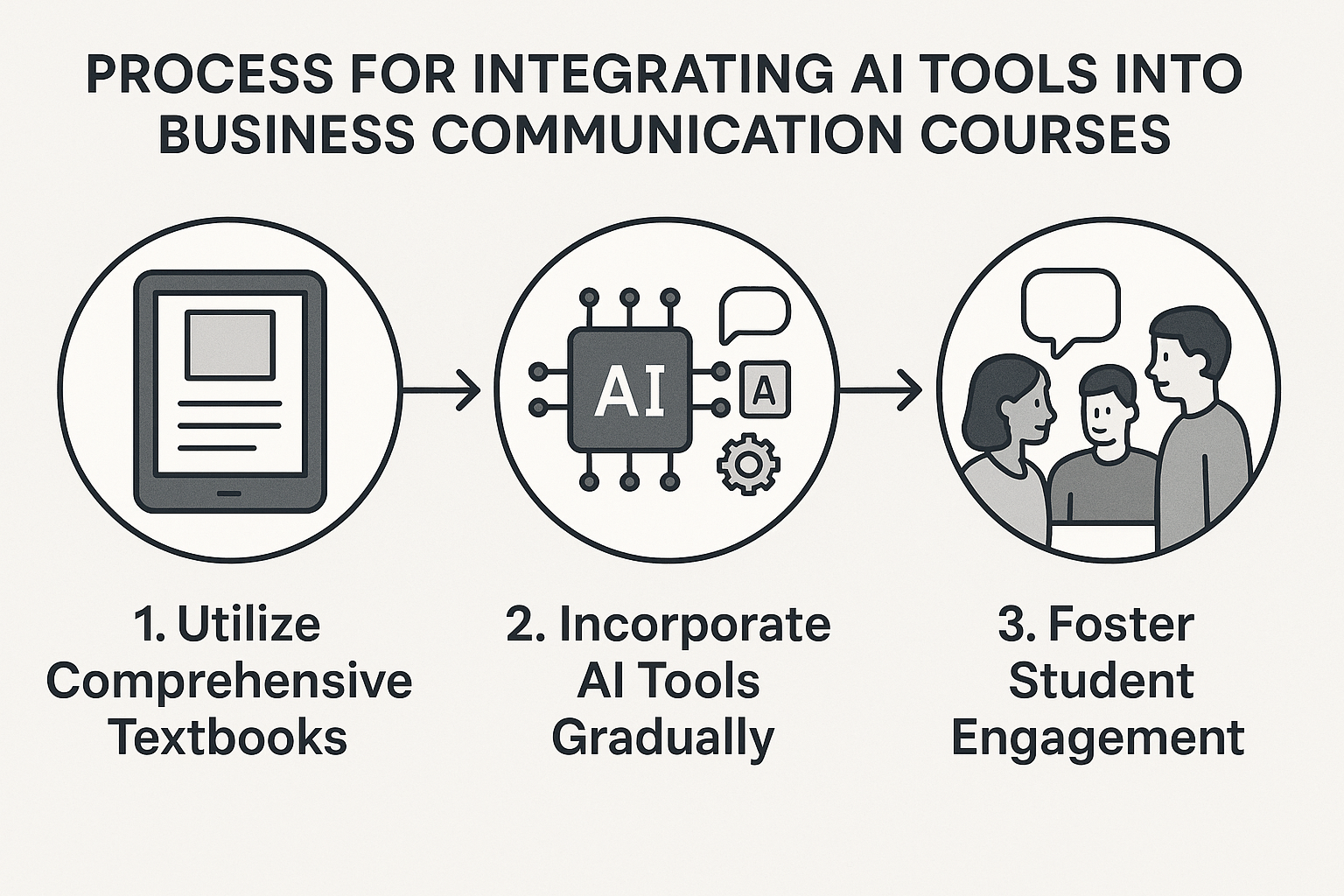
Leverage Comprehensive Textbooks
Utilize textbooks like Business Communication Today, which provides detailed sections on integrating AI into communication curricula. This approach ensures that instructors do not need to reinvent the wheel but instead rely on expert frameworks and strategies.
Incorporate AI Tools Gradually
Introduce AI applications progressively to help a diverse group of students become comfortable with the technology. Tools such as Grammarly or Jasper AI can be used for enhancing writing skills and automating feedback processes.
Facilitate Project-Based Learning
Encourage students to participate in AI-focused projects that emphasize critical thinking and creativity. Projects that involve designing AI-driven marketing campaigns or analyzing data trends foster hands-on learning and practical application.
3. AI Resources and Tools for Educators
Access to the right resources can bridge the gap between limited technical expertise and effective AI education. MyLab Business Communication, Pearson’s interactive digital learning platform, can support the course alongside AI-focused activities.
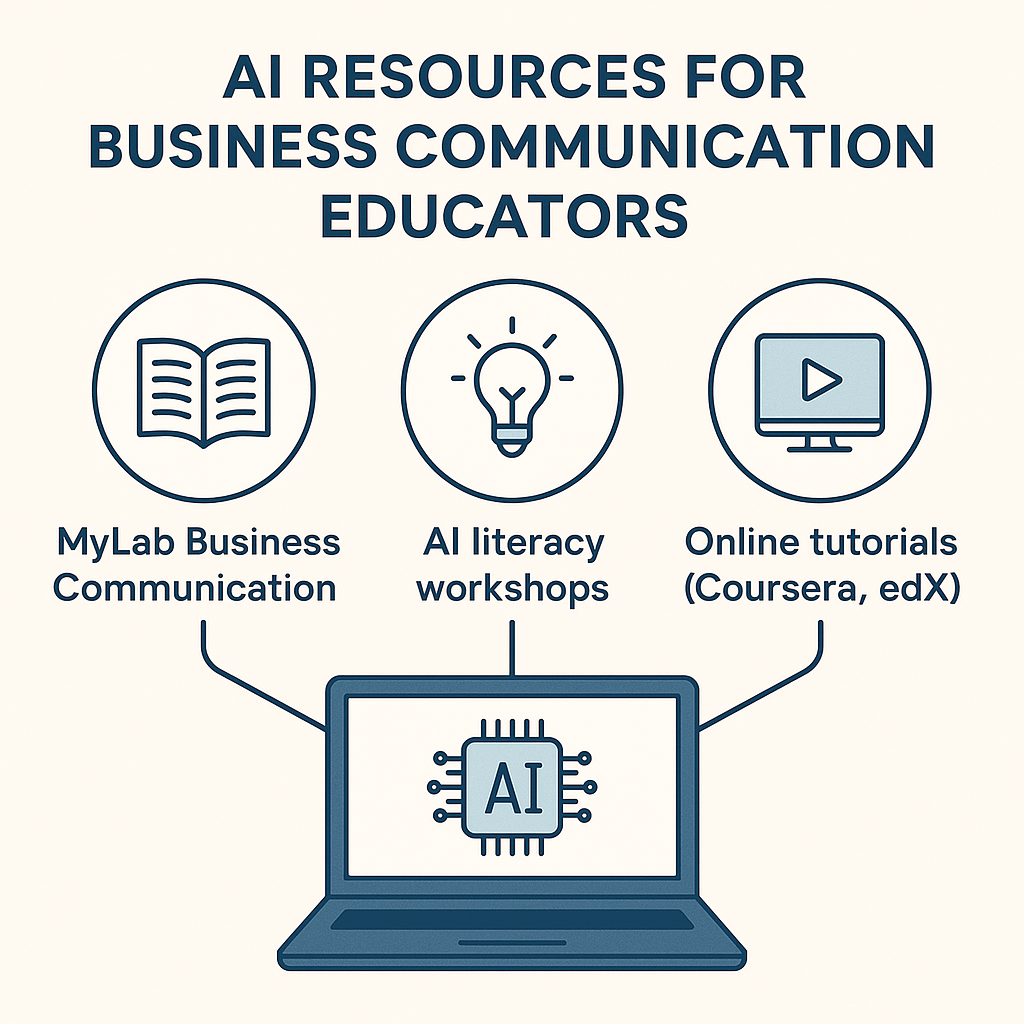
Additional resources such as AI literacy workshops and online tutorials, available through platforms like Coursera and EdX, can also support educators in enhancing their own AI knowledge alongside their students.
Key Takeaways
- AI literacy is increasingly important in today’s job market.
- Progressive integration of AI tools allows students to adapt effectively without overwhelming instructors.
- MyLab by Pearson adds Communication Mini Sims, writing assignments, and a video library to the course.
- Project-based learning can enhance understanding and application of AI technologies.
Glossary of Key Terms
AI Literacy: Understanding and using AI tools effectively in various contexts.
Generative AI: AI systems that can create new content by learning from existing data, including text, images, and videos.
Digital Literacy: The ability to navigate, evaluate, and create information using digital technologies.
MyLab: Pearson’s interactive digital learning platform for Business Communication Today, with Communication Mini Sims, writing assignments with AI-assisted grading, and a video library with assessment questions.
Project-Based Learning: An instructional approach where students learn by actively engaging in real-world and personally meaningful projects.
Related Questions
How can I start teaching AI without technical background?Begin by integrating AI components into your existing curriculum using a text such as Business Communication Today for guidance.
What are some effective AI tools for business communication?Tools like Grammarly and Jasper AI can help with writing precision; MyLab Business Communication adds writing assignments with AI-assisted grading.
How do AI tools benefit diverse student groups?AI tools cater to varied learning paces and styles, offering customized feedback to support diverse educational needs.
How can AI enhance ethical communication education?By using AI to simulate real-world scenarios, students can explore ethical dilemmas and critically analyze digital communication ethics.
What are the limitations of AI in teaching?While AI provides substantial support, it’s vital for instructors to balance technology use with core teaching methodologies to ensure comprehensive learning.
- What If You’re Not Teaching AI Prompt Writing?
- What if You Don’t Need to Be an AI Expert to Teach AI Confidently?
References & Citations
Bovée, C. L., & Thill, J. V. (N.D.). Business Communication Today (16th ed.). Pearson.
© 2026 Business Communication Teaching and Learning Center. All rights reserved.
For more insights, check out our other resources on business communication teaching.